IMDb >
Lilies of the Field (1963)
Quicklinks
Top Links
trailers and videosfull cast and crewtriviaofficial sitesmemorable quotesOverview
main detailscombined detailsfull cast and crewcompany creditstv scheduleAwards & Reviews
user commentsexternal reviewsnewsgroup reviewsawardsuser ratingsparents guiderecommendationsmessage boardPlot & Quotes
plot summaryplot synopsisplot keywordsAmazon.com summarymemorable quotesFun Stuff
triviagoofssoundtrack listingcrazy creditsalternate versionsmovie connectionsFAQOther Info
merchandising linksbox office/businessrelease datesfilming locationstechnical specslaserdisc detailsDVD detailsliterature listingsNewsDeskPromotional
taglines trailers and videos posters photo galleryExternal Links
showtimesofficial sitesmiscellaneousphotographssound clipsvideo clipsLilies of the Field (1963) More at IMDb Pro »
| Photos (see all 12 | slideshow) |
Overview
User Rating:
Release Date:
5 July 1963 (West Germany) moreTagline:
Sidney Poitier as the life-loving ex-GI who one day encounters five nuns escaped from beyond the Berlin Wall... morePlot:
An unemployed construction worker (Homer Smith) heading out west stops at a remote farm in the desert to get water when his car overheats... more | full synopsisAwards:
Won Oscar. Another 11 wins & 10 nominations moreNewsDesk:
(4 articles)
Poitier To Be Honored at Common Wealth Awards (From WENN. 27 March 2007)
Poitier Receives Honor at Cannes (From WENN. 19 May 2006)
User Comments:
Charming little film with Sidney Poitier as an itinerant handyman in rural Arizona. moreUS TV Schedule:
| Fri. Oct. 10 | 6:50 AM | TMC | |||
| Mon. Oct. 13 | 11:35 AM | TMC |
Cast
(Complete credited cast)| Sidney Poitier | ... | Homer Smith | |
| Lilia Skala | ... | Mother Maria | |
| Lisa Mann | ... | Sister Gertrude | |
| Isa Crino | ... | Sister Agnes | |
| Francesca Jarvis | ... | Sister Albertine | |
| Pamela Branch | ... | Sister Elizabeth | |
| Stanley Adams | ... | Juan | |
| Dan Frazer | ... | Father Murphy |
People Viewing This Page May Also Be Interested In These Sponsored Links (what's this?)
Additional Details
Parents Guide:
Add content advisory for parentsRuntime:
94 minCountry:
USAColor:
Black and WhiteAspect Ratio:
1.66 : 1 moreSound Mix:
MonoCertification:
USA:Approved | Canada:G (Manitoba/Quebec) | Canada:PG (Ontario) | UK:U | South Africa:(Banned) | Finland:S | Sweden:BtlFilming Locations:
Tucson, Arizona, USAMOVIEmeter: 
Fun Stuff
Trivia:
Shot on location in Arizona in only 14 days. moreGoofs:
Continuity: After Homer Smith leaves the nuns the first time, they have to walk to Mass - apparently a fair distance. When he returns, he picks them up in his car as they are walking to Mass but they still arrive just as Mass is beginning. They should have arrived much earlier as they thought they were walking the entire distance. moreQuotes:
Homer Smith: Gringo? I don't know if that's a step up or a step down from some other things I've been called. moreMovie Connections:
Featured in AFI's 100 Years... 100 Cheers: America's Most Inspiring Movies (2006) (TV) moreSoundtrack:
Amen moreFAQ
This FAQ is empty. Add the first question.more
Message Boards
Discuss this title with other users on IMDb message board for Lilies of the Field (1963) moreRecommendations
If you enjoyed this title, our database also recommends:
Show more recommendations
![]() |
![]() |
![]() |
![]() |
![]() |
| The White Sister | Sister Act 2: Back in the Habit | The Nun's Story | The Song of Bernadette | The Sound of Music |
|
IMDb User Rating:
|
IMDb User Rating:
|
IMDb User Rating:
|
IMDb User Rating:
|
IMDb User Rating:
|
Related Links
| Full cast and crew | Company credits | External reviews |
| News articles | IMDb Drama section | IMDb USA section |
| Add this title to MyMovies |


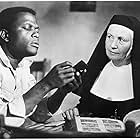
This charming, black and white film testifies to the power of faith. Five nuns who escaped over the Wall from East Germany are trying to start a new life in rural Arizona. Mother Superior (played by Lilia Skala) believes that Homer Smith (played by Sidney Poitier) has been sent by God to build a chapel. Smith demurs. He is a Baptist who isn't really religious. He would rather eat a big breakfast at Juan's (played by Stanley Adams) cafe than go to church behind the makeshift altar on Father Murphy's (played by Dan Frazer) pickup truck. The father describes religion graphically for Smith. "Welcome to the Poor Man's Vatican", he says as he ushers Smith into his small trailer home. "You take confession, provide absolution, bless the babies, hook up the trailer, kick the tires and pray. . .pray that the old car holds together to the next stop".
Faith permeates this film and it is catching. Mother Superior shows her faith in Smith as she introduces him to Mr. Ashton, a big local contractor. Ashton was played by Director Ralph Nelson and is one of the more engaging characters in the film. Interestingly, it is Ashton's skepticism about Smith's ability to the job that persuades Smith to stay. Mother Superior's faith ultimately is transmitted to the local Hispanic community and even Mr. Ashton. Cafe owner Juan puts the issue very much in perspective when he says that his work on the chapel is about "insurance". He doesn't really believe in God, he says, but just in case there is a hereafter he wants to be prepared.
The characterizations in this film are wonderful and deep. There is a strain of stubbornness in both Mother Superior and Homer Smith. It is a miracle they are able to work together. Indeed, Smith leaves the unfinished chapel behind for several weeks at one point. "Why don't you say thank you to me", he asks the Mother Superior. "You couldn't help yourself", she says.
Homer Smith isn't quite sure of himself. He is very uncomfortable in the role that Mother Superior sees for him. Later, when he returns to work on the chapel he stubbornly refuses the help of the locals. He sees himself as the one chosen to build the chapel. Mother Superior chides him as does Juan. "Where would you like us to bury you?", he asks. Ultimately, the locals take over the project with disastrous results. Homer steps in and directs the work to its completion.
Homer's disappearance in the middle of the film is a mystery. He has a problem with being the chosen one and drives away in his station wagon. When he returns the door on the passenger side is now wired shut. He is also dressed in an obviously loud Hawaiian shirt. His unusual dress is topped off by dark glasses. It is like he has returned from a two-week drunk. When he goes to have his big breakfast in the cafe, he wants very little to eat.
Juan is one of my favorite characters in this film. I liked Juan's homespun philosophy. The scene in which Homer eats the big breakfast at the beginning of the film is very good. The two characters are very much alike. Both came from religious families, but neither are religious. Ultimately, they are both empowered by faith.
Like Juan, Mr. Ashton is also a businessman. He too is enriched by the building of the chapel. He delivers a load of bricks for the chapel. When the Mother Superior calls out to him, he remarks that he should have sent them anonymously. On the way out he complains to Homer Smith that she won't let him alone now. Such is the price of faith.
Although it doesn't really go anywhere, this film has the look and feel of a road movie. The film begins with Homer Smith's car on a lonely road. Also, there are the images of the nuns trekking down the miles of empty gravel road to Sunday morning services. Father Murphy uses the road to go from one "country club" to another on his circuit. The blessing of the chapel is that it will be a focal point for the community. Father Murphy's church won't be on the road any longer. But Homer Smith must go. Mr. Ashton offers him a good job as a foreman, but he declines. He is a modern day tumbleweed going where the wind blows or, more accurately, where the road goes.
There is a racial edge to this film. Smith is black, and the nuns are white. Juan and the members of the community are Hispanic. Father Murphy is white. Ultimately, all of these people come together to build the chapel. One point in the film where race becomes overt is when Homer Smith meets Mr. Ashton. "Hey boy", he says to Smith. Smith quickly turns the tables on Ashton and calls him "boy". That seems to bridge the divide between them. In the end it is Ashton who offers Smith a position of foreman. In another scene Smith compares Mother Superior to Hitler. Later, Mother Superior returns the compliment. Ultimately, both are able to go beyond their stubbornness and work together.
This movie captures for me the special spirit of rural communities. I never grow tired of watching it.